
Pricing is one of the first things people check when looking into skip hire, and it’s also one of the areas where confusion most commonly sets in. A headline price that doesn’t include delivery, or a quote that changes when a permit turns out to be needed, or an unexpected surcharge for a load that was deemed overweight — these are the kinds of surprises that make people wary. Our affordable skip hire service works on a different basis: the price we quote is the price you pay, with any additional requirements — permits included — explained upfront before you commit to anything.
What actually affects the cost of skip hire
Skip hire pricing is driven by a handful of factors, and understanding them helps you make a decision that keeps costs down without ending up with the wrong skip for the job. The two most significant variables are skip size and waste type, but hire duration, placement location, and whether a permit is needed all feed into the final figure too.
Size is the most obvious factor — larger skips cost more to deliver, collect, and process. But the relationship between size and cost isn’t always as straightforward as it looks. A skip that’s too small for the job ends up needing a swap or a second hire, which costs more than getting the right size first time. The economics of skip hire generally favour going one size up if you’re genuinely uncertain, because the price difference between adjacent sizes is usually much smaller than the cost of an additional collection.
Waste type affects disposal costs at the processing stage, which feeds into the overall price. Heavy inert materials — concrete, bricks, soil — cost more per tonne to process than lighter mixed waste, which is why a skip loaded predominantly with hardcore will often attract a different rate than the same skip filled with general household clearance material. Mixed waste containing hazardous materials — treated timber, asbestos cement, paint — can result in the entire load being reclassified, which is the most expensive outcome and the one most worth avoiding. Being clear about what’s going in the skip when you book means the quote reflects the reality of the job.
Choosing the right skip size to keep costs under control
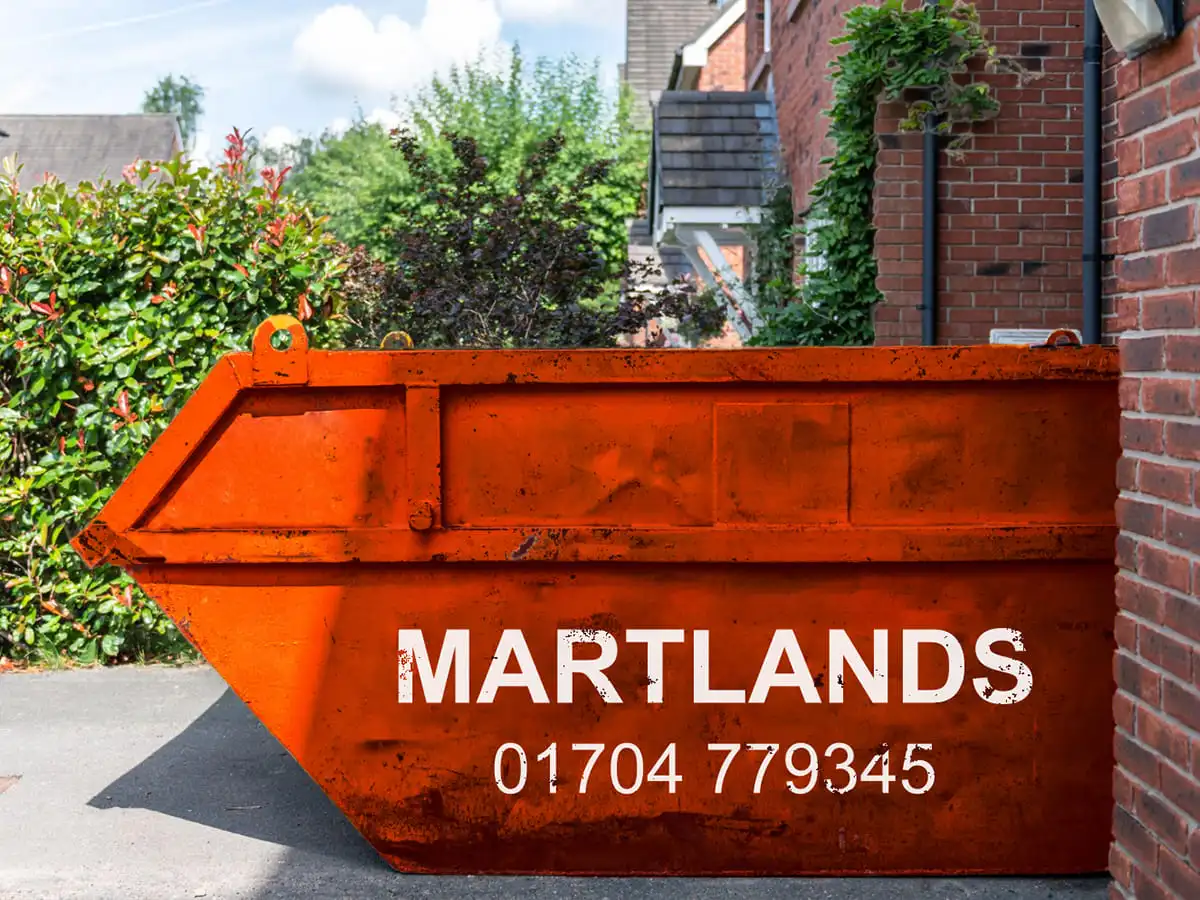
For most domestic projects — room clear-outs, garden tidies, light renovation work — a 4 tonne midi skip covers the job without paying for capacity that isn’t needed. It handles a substantial volume of mixed household and garden waste and sits comfortably on most driveways without causing access problems. For larger domestic projects — a full kitchen or bathroom strip-out, a loft clearance combined with a garden clear-out, or an extension generating mixed construction waste — an 8 tonne builders skip is the more cost-effective option because it avoids the need for a second delivery.
One thing worth understanding about skip capacity is the distinction between volume and weight. A skip has both a volume limit — how much physically fits inside — and a weight limit, which can be reached before the skip looks full if the material being loaded is dense. Concrete, bricks, and soil are the common culprits. A skip that’s half-full of concrete can already be at its weight limit, and loading more on top creates a problem at the collection stage. If your project involves significant amounts of heavy inert material alongside lighter mixed waste, it’s worth mentioning that when you book so we can advise on the most cost-effective approach. Our skip size guide goes into more detail on matching size to project type.
Permits and what they cost
A permit is required when a skip is placed on a public road or pavement rather than on private land. The permit itself comes from the local council — West Lancashire Borough Council for most of our service area, Sefton Council for Southport, Formby, Ainsdale, and Crosby — and carries a fee set by the council rather than by us. We handle the application on your behalf and include the permit fee transparently in the quote, so there’s no point at which a permit cost appears unexpectedly after the booking is made.
Not every job needs a permit. If the skip can go on a driveway or within the property boundary, no permit is required and that cost drops out entirely. It’s worth thinking about placement early in the planning process — sometimes a slightly different position within a property means a permit isn’t needed, which saves both the fee and the processing lead time. More detail on when permits apply and how the process works is covered in our road permit skip hire guide.
Recycling and how it affects your disposal costs
Responsible disposal and keeping costs down pull in the same direction more often than people realise. Materials that can be separated and recycled cost less to process than mixed contaminated waste, which means a skip loaded with reasonably well-segregated material often results in a better outcome both environmentally and financially.
At our own recycling centre, waste from every collection is sorted and processed — metals, aggregates, timber, and cardboard are all separated out for recovery. The proportion that goes to landfill is kept as low as possible, and that processing happens through our own facility rather than a third-party handler. For customers with planning conditions or environmental reporting requirements, we can provide documentation of disposal routes alongside the standard waste transfer notes that come with every licensed collection.
Skip hire across Ormskirk, Southport, Bamber Bridge and beyond
We cover the full range of West Lancashire and into Merseyside — Ormskirk, Southport, Burscough, Formby, Skelmersdale, Leyland, Chorley, Bamber Bridge, Crosby, and the surrounding villages. Pricing is consistent across the service area for standard placements, with any location-specific factors — access constraints, permit requirements for particular roads — discussed at the booking stage rather than appearing on the final invoice.
For customers in Bamber Bridge and Leyland, where residential development and ongoing home improvement activity keeps demand steady throughout the year, we maintain regular delivery schedules that keep lead times short and allow forward booking without locking in dates that might need to shift as a project develops.
With over a century of operating across West Lancashire, we’ve built a pricing model around what the work actually involves rather than around optimistic headline rates that change on delivery. If you want a clear quote for your project, get in touch with our team or call us on 01704 779345 for Ormskirk, Southport, and surrounding areas, 01772 364399 for Leyland and Bamber Bridge, or 01257 752399 for Chorley. We’ll give you a figure that covers everything the job needs.