
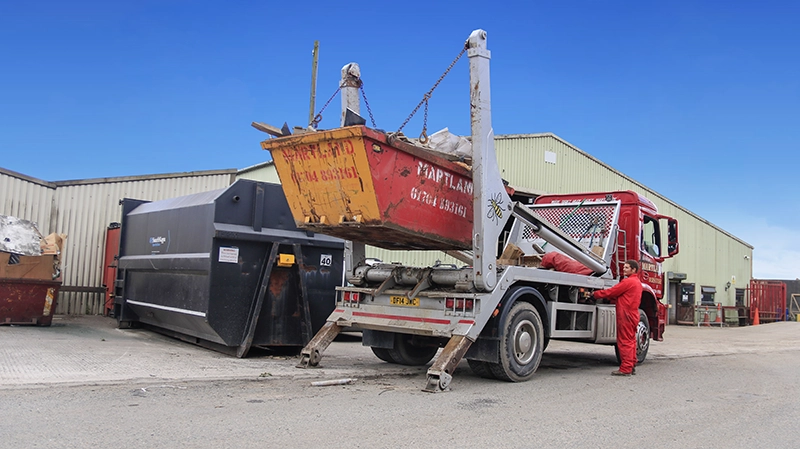
A skip packed above its rim is one of the most common reasons a collection gets turned away on the day, and it catches out experienced trades as often as first-time hirers. Level loading a skip in West Lancashire is not a preference we impose to be awkward, it is a transport requirement that keeps the load legal and safe once the lorry pulls away. After more than a century moving skips around this part of the county, we know the rule sits right alongside the question of how high a skip can be filled, and getting it right saves everyone a wasted journey.
What Level Loading Actually Means
Loading level means nothing sits above the top edge of the skip. The waste should finish flush with the rim, not heaped into a dome and not bristling with timber or pipe poking over the sides. The reason becomes obvious once you have watched a skip being lifted onto a lorry. The driver has to sheet or net the load so nothing escapes on the road, and a heaped skip cannot be covered safely. Loose material sitting proud of the rim can shift, slide and fall into the carriageway the moment the vehicle moves, which is exactly what the loading rules are written to prevent.
Why We Cannot Collect an Overfilled Skip
When a driver arrives to a skip mounded over the top, the reality is that the load cannot leave in that state. We cannot sheet it, the weight is often pushed past what the skip is rated to carry, and putting it on the road that way would be unsafe and unlawful. The result is a refused collection and a return trip once the level has been brought down, which delays your project and pushes back the next booking in the round. On a heaped 8 tonne builders skip the problem is worse again, because the sheer mass of an overloaded large skip raises real concerns about axle limits long before it reaches the weighbridge.
Choosing a Size That Avoids the Problem
Most overfilling happens because the skip was a size too small for the job, so the temptation to squeeze in one more load becomes hard to resist. The fix is to give yourself headroom from the start. For a tight driveway or a modest clear-out a 4 tonne midi skip often does the job without crowding the space. For bulky but lighter waste, stepping up to a 20 yard roll on roll off skip gives far more room to fill level rather than high. Picking the right capacity at the booking stage is the simplest way to avoid ever facing a refused lift.
Roadside Skips and the Extra Care They Need
A skip standing on the public highway carries a higher bar again. Anything proud of the rim is a hazard to passing traffic and to anyone on foot after dark, which is why a roadside skip must be kept level, lit and marked. If your skip is going on the road rather than your own land you will need a skip permit for roadside placement, and we handle that application for you. The permit conditions assume a level load, so an overfilled roadside skip can put you on the wrong side of the council as well as the collection schedule.
What We Do on Collection Day
Our drivers carry out a quick check before lifting, looking down the line of the rim to confirm the load is flush and that nothing will shift in transit. Once it is sheeted and away, the skip comes back to our own yard where the contents are weighed and sorted rather than tipped straight to landfill. That route through our recycling centre is part of why level loading matters to us beyond the road rules, because a tidy, flush load is far easier to process and recover material from than a crushed, overpacked one.
How to Fill a Skip So It Loads Level
Filling a skip well is partly a matter of order. Flat, heavy items sitting at the base give you a stable floor to build on, and broken-down bulky items take up far less room than the same things thrown in whole. A wardrobe carcass snapped flat, boxes collapsed and long timber cut down all pack tighter and leave fewer air pockets, which means you reach a useful, level load rather than a teetering mound. As the skip fills, work the smaller pieces into the gaps around the larger ones instead of letting voids open up in the middle. The moment material reaches the line of the rim, that is the skip full, however tempting the apparent space above it looks. Stopping there is what keeps the lift safe and the collection on schedule, and it is almost always a sign you have chosen the right size if the skip finishes flush and settled rather than heaped. If you find yourself wanting to build above the rim to fit everything in, that is the clearest signal that the next size up would have served the job better.
Booking a Skip Across West Lancashire
We deliver level-loadable skips throughout the area, whether you are clearing a property with Ormskirk skip hire at the centre of your project or working nearer the coast. Customers booking Southport skip hire face the same loading rules, as do those arranging Burscough skip hire for rural jobs with longer drives. Wherever you are, a quick word at the booking stage about what you are throwing away helps us send the right size first time.
If you would rather avoid a refused collection altogether, talk to us before you start filling. Call our team on 01704 779345 for clear advice on the right size for your load, or reach us through our contact us page.