
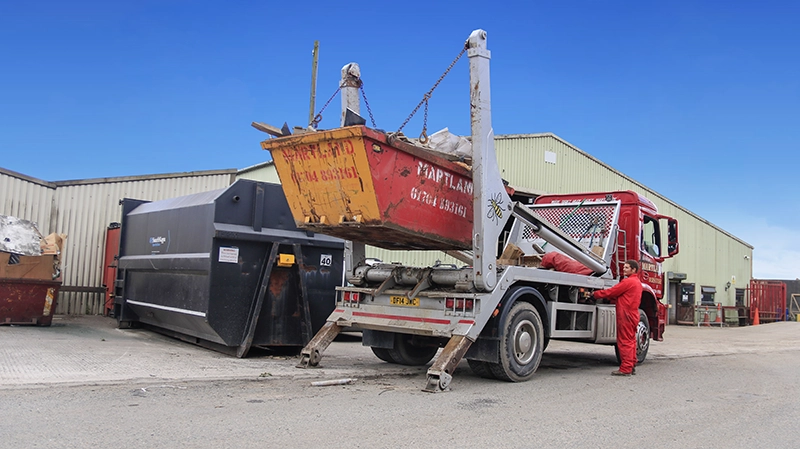
A renovation generates far more waste than most people anticipate, and it rarely arrives all at once. A kitchen refit, a full re-plaster or a downstairs reconfiguration produces a steady stream of rubble, timber, old units and packaging across several weeks, and managing that flow is half the battle. Getting your skip hire for home renovations matched to the work is what keeps a project moving rather than stalling behind a heap of debris.
Why Renovation Waste Needs Planning
The mistake we see most often is treating renovation waste as one undifferentiated pile. In reality it comes in stages, and each stage is heavier or bulkier than the last. The strip-out phase produces volume rather than weight, old cabinets, skirting, doors and floor coverings that take up space but weigh relatively little. The structural phase is the opposite, where broken plaster, tile, brick and concrete are dense and heavy. The finishing phase brings packaging, offcuts and the general detritus of fitting out a room. A skip that suits one of those stages may be wrong for another, and that is why a little forethought saves money and frustration.
Matching the Skip to the Stage
For the heavy structural work, weight is the deciding factor rather than volume. Rubble, tile and concrete are dense enough that a large skip filled with them would be impossible to lift safely and illegal to transport, so a builders skip is usually the right call for that phase. Our 8 tonne builders skip hire is built for exactly this kind of dense load. For the lighter strip-out and finishing stages, where you are dealing with bulky but manageable items, a 4 tonne midi skip hire often makes more sense, giving you the room you need without paying for capacity you will not fill. Phasing two smaller skips across a long renovation is frequently cheaper and tidier than wrestling with one oversized one from start to finish.
Heavy Waste and the Overloading Trap
The hard limit on any skip is weight, not how high you can pile it, and renovation waste is where this catches people out. A skip loaded above its rim cannot be collected, because the load has to be sheeted and legal for the road. More importantly, a skip filled to the top with rubble can exceed its safe weight long before it looks full. The trade habit worth borrowing is to keep heavy materials like brick and concrete to the bottom third of the skip and to fill the upper space with lighter, bulkier waste. If a job is producing serious volumes of hardcore, talk to us early and we will advise on the right approach rather than letting an overloaded skip become your problem on collection day.
Permits, Placement and Compliance
Where the skip goes matters as much as which skip you choose. If you have off-road space, a driveway placement avoids permits altogether and keeps the skip close to the work. If the skip has to sit on the public highway, you will need a permit from the relevant council, and we handle that application as part of the booking. The rules differ depending on where you are, and our guidance on skip hire with permit road and pavement placement in West Lancashire explains what to expect. As a licensed carrier, we also provide the duty of care documentation that proves your renovation waste was handled legally, which protects you if questions are ever asked.
Recycling the Waste From Your Project
Renovation waste is some of the most recoverable material we handle. Clean rubble can be crushed and reused, timber and metal are readily recycled, and plasterboard is separated and sent to a dedicated route because it cannot go to landfill mixed with general waste. Running everything through our own recycling centre means a high proportion of what leaves your home is recovered rather than buried, and you can see how that works on our environmental and recycling page.
How Long to Keep the Skip on a Renovation
One question that comes up on almost every renovation is how long the skip should stay. A project rarely runs exactly to plan, and a skip that has to be collected mid-job because the hire period lapsed is a false economy, leaving you with waste building up and nowhere to put it. When you book, it helps to give us a realistic timeline for the work rather than an optimistic one, so the hire period matches the pace of the job. We can collect early if you finish ahead of schedule or extend if the work runs on, and that flexibility is usually cheaper than a second delivery brought in to cover a gap.
Co-ordinating the delivery with the start of your heavy phase makes a real difference too. A skip that sits empty on the drive for a fortnight while the planning is finalised is capacity you are paying for and not using. Timing it so the skip arrives as the strip-out begins, fills steadily through the messy phases, and leaves once the bulk of the debris is gone keeps the cost in proportion to the work and your frontage clear for as long as possible.
Renovations Across Our Local Area
We support home improvement projects throughout West Lancashire and Merseyside, from terraced refurbishments in town to larger family homes in the surrounding villages. Whether your project is in Southport skip hire territory, out towards Burscough skip hire, the same experienced team plans the deliveries and collections around your build. When you are ready to talk through the stages of your renovation and get the right skip in place, call us on 01704 779345 or reach us through our contact us page.