
Getting rid of garden waste is rarely just about grass clippings. Ask anyone who has cleared a garden properly, and they will say the surprise is everything else. Cracked slabs, half-buried bricks, a rotten bench and a mound of soil from the new bed all turn up. The best solution has to handle both halves of that load. That is exactly what our garden waste skip hire is built for.
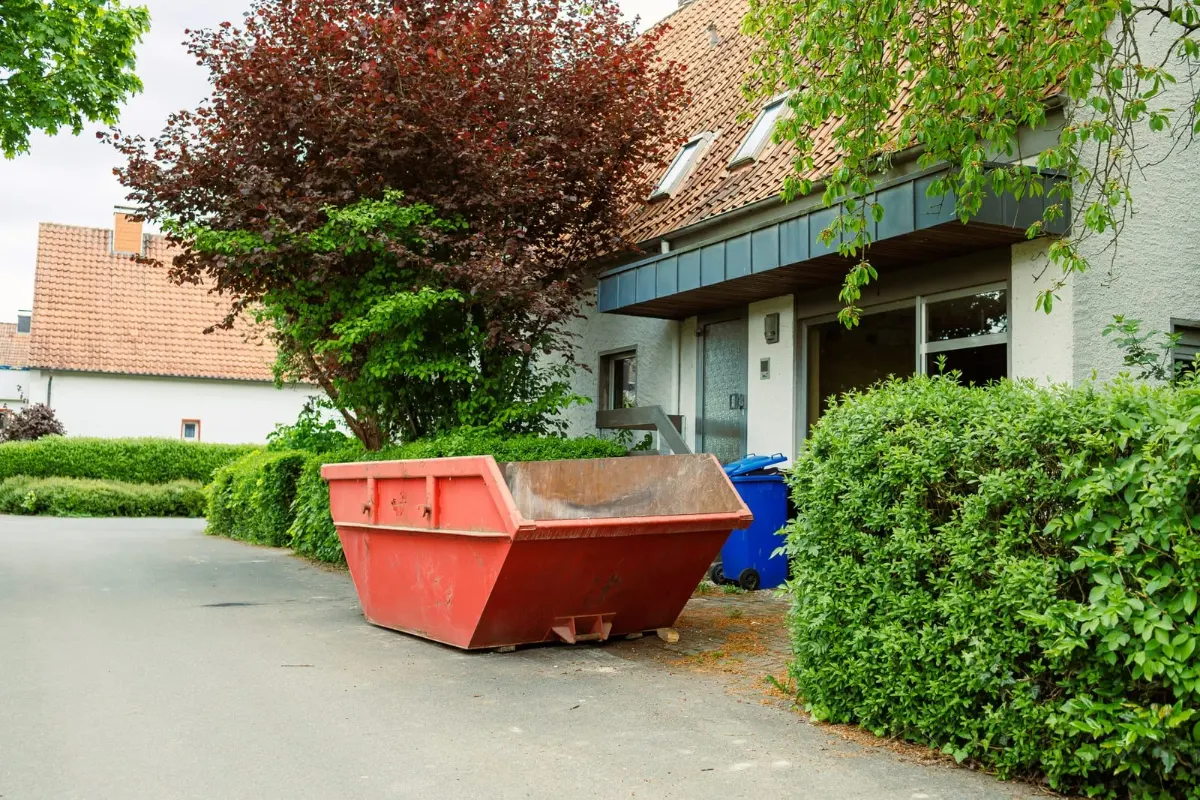
A garden clearance is never just green waste
After a century of collecting skips from gardens across West Lancashire, we know what a real clearance produces. Roughly speaking, it splits into two opposite kinds of waste.
The green half includes clippings, prunings, branches, weeds and turf. It is bulky but light, so it fills the skip long before it reaches the weight limit. The hard half is the reverse. Soil, rubble, slabs, bricks and old concrete look compact but are astonishingly heavy. Old planters, broken furniture, fence panels and netting sit somewhere in between.
Knowing which half dominates your project is the key to loading it well. In short, green waste runs out of room, while hard waste runs out of weight.
Getting rid of garden waste: the green half
Before anything green goes in a skip, it pays to shrink it. Chipped branches make good mulch, and leaves can rot down into leaf mould. A compost heap also absorbs a surprising amount of soft growth. Recycle Now explains how to set up home composting.
On a proper clearance, there is always plenty left after that. Chop it short and press it down, because air is the enemy of space with green material.
Does the project also need material coming the other way, such as new beds or levelling? We deliver screened top soil on the same rounds, so one supplier works in both directions.
The heavy half, where weight is the real limit
Soil and rubble catch out first-time hirers. A skip full to the brim with earth weighs far more than one full of hedge trimmings. It is the weight rating, not the rim, that decides what our lorry can lift.
That is why skips have fill rules for dense material. Our guide on how full can you fill a skip with soil explains them. So if your project involves digging out a patio or a long border, mention the soil when you book.
For clearances with lots of slabs, brick and concrete, the 8 tonne builders skip earns its name. It takes dense loads that would max out a smaller skip long before it looked full.
One skip or two
For most garden projects, one mixed skip is fine. Our 4 tonne midi skip handles the usual mix of green waste, old pots and a few slabs easily.
Larger landscaping jobs sometimes work better with two skips, one for green waste and one for hard waste. Clean loads are simpler to process than mixed ones. As a result, keeping them apart can help on bigger projects. We are happy to make that call with you on the phone.
Whichever way you go, the usual placement rules apply. Your own driveway needs no permission. However, a roadside skip needs a council permit first, as our guide on whether you need a skip permit and how to get one explains.
Where both halves end up
Both halves of a garden load have great recycling stories. At our own site, we process green material into compost and soil products instead of landfill. Meanwhile, we crush brick, stone and concrete into recycled aggregate for new projects.
When it goes through the right channel, very little of a garden clearance is wasted. Our environmental and recycling page explains how the sorting works.
Serving gardens across West Lancashire and Merseyside
Our lorries are in someone’s garden most working days. That ranges from sandy plots served by Formby skip hire to established gardens covered by Maghull skip hire. Our drivers have seen every mix of green and heavy waste.
Planning a clearance? Tell us what is coming out, the green, the heavy and everything in between. We will then match the skip to the load. Call 01704 779345 or send details through our contact page, and getting rid of garden waste will be one less job on your list.