
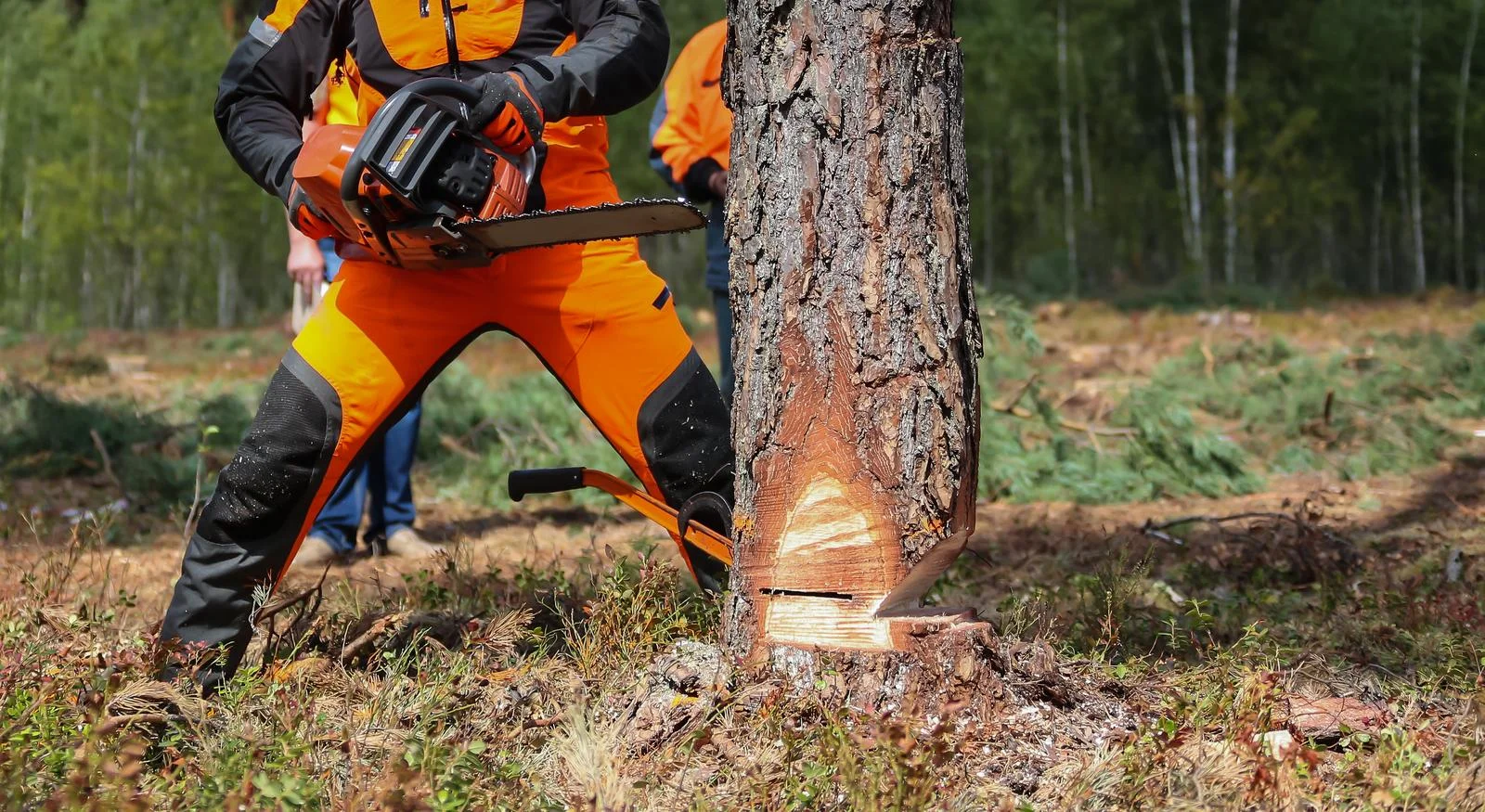
Late autumn is when tree work happens properly. The leaves are down, the nesting season is long over, and the ground is still firm enough to get a chipper up a garden before the winter turns it. Getting tree work skip hire in Appley Bridge sized correctly is the part that catches people out, because freshly cut timber behaves nothing like the dry logs it eventually becomes.
Green timber weighs far more than people expect
A living tree is mostly water. Cut a section of green hardwood and it can weigh close to twice what the same piece will weigh once it has seasoned through a summer, and that difference is the single most common reason a skip on a tree job goes over its limit. The customer sees a skip that is half full of wood and assumes there is plenty of room. The wagon arrives and cannot lift it.
It is worse in November because everything is saturated. A stack of green cordwood after a wet fortnight is carrying rainwater on top of its own moisture, and on the wooded slopes around this village that is the normal condition rather than the exception. Our note on skip size versus weight limits explains where the ceiling actually sits and why it is not about how full the container looks.
Brash is the opposite problem
Where cordwood is heavy and compact, brash is light and impossibly bulky. A single mature limb reduced to brash will fill a surprising proportion of a skip if it goes in as it comes off the tree. Cutting it down and packing it tight rather than throwing it in whole is the difference between one skip and two.
If there is a chipper on site, chipping the brash and skipping the chip is far more efficient, and many arborists will leave the chip for the customer to use as mulch. What goes in the skip after that is the cordwood, the stumps and whatever is not worth keeping. That combination is much easier to size for.
The other reason to reduce brash properly is the collection itself. A skip packed with springy uncut material settles and shifts in transit, which is exactly what a sheeted load should never do, and it is the sort of thing a driver will refuse at the gate rather than risk on the road.
Stumps and root balls bring the ground with them
A root ball is timber and soil together, and the soil is the heavy part. Ground out stumps are easier because the grindings are loose, but a stump that has been dug and lifted whole comes up with a considerable amount of earth attached to it and it should be knocked off before it goes in the skip wherever practical.
This is where a job most often needs a bigger container than the tree suggested. For most domestic tree work with stumps involved, our 8 tonne builders skip is the right starting point, and our range of skip sizes and dimensions gives the measurements if you want to compare before booking.
Loading a tree job so it can actually be collected
Timber does not settle the way rubble does. Logs stacked at angles leave voids, and the temptation is to build up above the rim to use the space. A skip loaded above the rim cannot be sheeted and cannot legally travel, so it sits on the drive until it is levelled off. Our piece on can a skip be too full covers what that means in practice.
The better approach is to lay the cordwood flat in courses, fill the gaps with the smaller material, and keep the whole load below the top edge. It looks less impressive and it goes on the wagon first time.
Tree work skip hire in Appley Bridge on a wooded site in November
Access here is the honest constraint. A lot of the properties around the village sit off narrow lanes with steep or soft approaches, and by late November a grass verge or an unmade drive that was fine in August will not carry a loaded skip wagon. We would far rather look at the access before the day than have a wagon standing at the bottom of a lane unable to get up it.
Where the skip has to stand on the highway rather than on the property, Lancashire County Council is the highway authority and the permit is thirty six pounds per month, arranged before we deliver. On a narrow lane placement also needs thinking about in terms of what else has to get past, and our drivers know these roads well enough to advise.
Why we would rather have the timber than see it burnt
Green waste and timber are among the better materials we receive. Everything comes back to our own recycling centre where the timber is separated and processed rather than buried, which is the basis of how our environmental and recycling operation works. Burning arisings on site produces complaints from neighbours, is difficult to control in wet conditions and wastes material that has a use.
We cover this stretch of the valley and the villages around it daily, so whether the work is here, over towards Parbold skip hire customers or down into Skelmersdale skip hire addresses, the sizes and the advice hold good and only the access notes change.
If tree work is booked in before the winter, ring our team on 01695 769123 or send the details through our contact page. Tell us what is coming down, whether the stumps are being taken and what the access is like, and we will size it for wet timber rather than dry.