
Running a business comes with a long list of responsibilities, and waste management quietly sits among the most important of them. There is a common assumption that once your waste contractor drives away, any problem with that waste becomes their concern alone. It does not work that way, as the waste duty of care code of practice makes clear. Under UK law you remain responsible for your waste from the moment it is produced until it is properly dealt with, and that responsibility is known as the business waste duty of care. We have handled commercial waste across West Lancashire for over a century, and arranging compliant commercial skip hire is one of the simplest ways to meet it.
What the business waste duty of care actually means
The duty of care is set out in section 34 of the Environmental Protection Act 1990, and it is reinforced by the Waste (England and Wales) Regulations. In plain terms, it says that anyone who produces, holds, or handles waste must take all reasonable steps to make sure it is managed properly at every stage, from how it is stored on your premises to how it is transported and where it finally ends up. The point that surprises many owners is that the duty stays with you even when a third party carries the waste away. Handing it to someone else does not hand over the legal responsibility. That is why the law expects you to take a proactive, traceable approach rather than assuming someone further down the chain will sort it out.
Why getting it wrong is expensive
The consequences of falling short are not trivial. Local authorities and the Environment Agency can issue substantial fines for poor storage, unauthorised transport, or improper disposal, and serious or repeated failings can end up in court. Beyond the legal penalties there is the wider cost. Waste that leaks, contaminates, or is fly-tipped after leaving your site can cause real environmental harm, and if it is traced back to your business the damage to your reputation can outlast any fine. Insurers may also step back from claims linked to mismanaged waste. Set against all of that, getting the basics right is far cheaper and far less stressful.
Storing your waste properly
Compliance starts on your own premises with sensible storage. That means keeping different waste streams apart so recyclable material, general waste, and anything hazardous are not mixed, using containers sound enough to prevent leaks and spillage, and keeping the storage area secure so nothing escapes or is tampered with. Regular checks that containers are in good order and not overflowing go a long way, as does placing them where they pose no risk to staff or the public. Good storage is not only about compliance. It also makes your waste easier to measure and far easier to document when it is transferred.
Reducing what you throw away
The second strand of the duty is thinking about the environmental impact of your waste rather than simply getting rid of it. Auditing what your business actually discards often reveals quick wins, whether that is switching to reusable packaging, cutting paper through digital processes, or ordering more carefully so less ends up unused. Bringing staff into the effort with a little training helps it stick. Everything we collect comes back to our own recycling centre to be sorted and recovered wherever possible, and you can see how that works on our environmental and recycling page. Reducing waste at source tends to lower your disposal costs and strengthen your environmental standing at the same time.
Using only authorised waste carriers
The third strand is making sure your waste is only ever handled by licensed, authorised carriers and taken to permitted facilities. It is not enough to pass it to whoever offers the cheapest collection. You are expected to check that the carrier is registered, and to keep the paperwork that proves where your waste went. Every transfer should be covered by a waste transfer note recording what the waste was, where it came from, and who took it, ideally classified with the correct European Waste Code. Those records should be kept for at least two years so you can show compliance if you are ever asked. We are a fully licensed waste carrier, and our skip hire duty of care guide goes into the documentation side in more detail. If you want to understand where your material actually ends up, our explainer on what happens to the waste in your skip follows the journey from collection onward.
Matching the right skip to your business
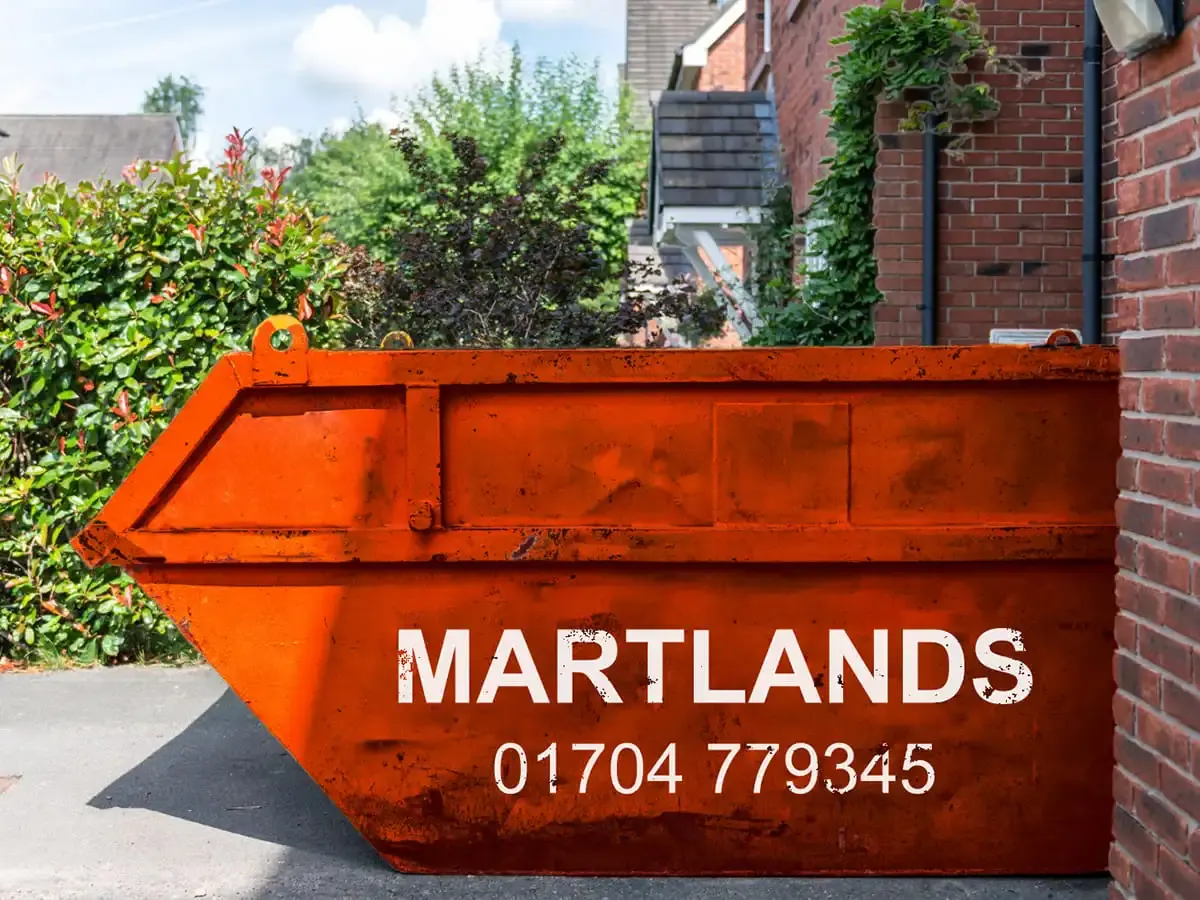
For most commercial waste, a skip is the cleanest and most accountable way to stay compliant, because every collection comes with the paperwork built in. A steady stream of trade or office waste is often well served by an 8 tonne builders skip, while larger sites and ongoing projects can move serious volumes with a 20 yard roll on roll off skip or, for the busiest operations, a 40 yard roll on roll off skip. We help you pick the size that fits your throughput so you are neither paying for empty space nor calling for collections more often than you need.
Supporting businesses across West Lancashire
We work with firms right across the region, from independent traders to larger sites around skip hire in Ormskirk and the commercial areas of skip hire in Southport. Because the waste comes back to our own centre, we can keep your records consistent and your collections reliable, which is exactly what the duty of care asks of you.
Get your commercial waste on the right footing
Meeting the business waste duty of care is far simpler with the right partner handling the heavy lifting. Store your waste properly, keep what you can out of the bin in the first place, and use a licensed carrier who gives you the paperwork every time. Tell us about your premises and the waste you produce and we will recommend the right skip and keep your transfer notes in order. Call our commercial team on 01704 779345 or reach us through our contact our team page.