
Central heating removal usually happens in summer, for an obvious reason. Being without heat in May is an inconvenience rather than a crisis. The job is unusual, because much of what comes out is worth money rather than costing money to remove. Our Litherland skip hire service covers the part that does need a skip.
The gas work is not a job for anyone else
This is worth saying first. Only a Gas Safe registered engineer may disconnect, cap and remove gas appliances. That is the law, not just advice. The same applies to anything involving the meter or the supply.
Once the engineer has made the appliance side safe, a householder or builder can handle the rest. Pipework, radiators, cylinders and tanks are then ordinary plumbing.
The copper is the valuable part
An old system holds a surprising amount of copper, and copper has strong scrap value. So it should not go in a skip.
The cylinder is the biggest single item. An old copper hot water cylinder is worth taking to a scrap merchant on its own. If you are replacing one, set it aside first.
Next comes the pipework. Older homes around here often have a mix of imperial copper and microbore. A full house strip yields a lot of it. Keep it in one pile and out of the skip, and it will cover part of the cost of the job.
Brass fittings, valves and old taps go in the same pile. You do not need to strip the insulation off every pipe. However, do keep the metal separate from the general waste.
Radiators are heavy and also scrap
Steel panel radiators are bulky, awkward and heavy. They also take up a lot of room in a skip. Yet they are scrap steel with a value.
Old cast iron radiators are different again. They are extremely heavy, and each one is a two-person lift. Decorative ones also have a real second-hand market. So check what you have before anything goes for scrap. A reclaimed column radiator in good condition is worth far more than its scrap weight.
Drain every radiator properly before moving it. The water in an old system is black and stains everything permanently. Besides, a radiator that feels empty rarely is.
What goes in the skip after central heating removal
Once the metal is out, what is left is the genuine waste. It is mostly building fabric rather than heating parts.
That includes old pipe lagging and floorboards lifted to reach pipe runs. It also includes plaster from walls chased for new pipes, any boxing-in and the old header tank from the loft. That tank is usually full of forty years of sediment.
If a back boiler is coming out of a fireplace, expect rubble. Removing one means opening up the space behind it. That creates a dense load from a small area. Our page on skip size versus weight limits explains why weight matters more than volume here.
Keep any new plasterboard offcuts out of the general load. Our page on plasterboard disposal and building waste separation explains why.
The things that need checking
On an older system, two things deserve a look before anyone disturbs them. Old boilers sometimes used rope seals and panels made from materials no longer allowed. Pipe lagging in homes of a certain age is the classic example. Read the HSE guidance on asbestos if you have any doubt. Our guide to hazardous waste and why it cannot go in a skip explains what needs a licensed contractor.
The old boiler itself is an appliance. It belongs with electrical waste rather than in a skip. Our guide on how to dispose of electrical waste responsibly covers where it goes. Most installers take the old boiler away anyway, so check your quote first.
Sizing and access
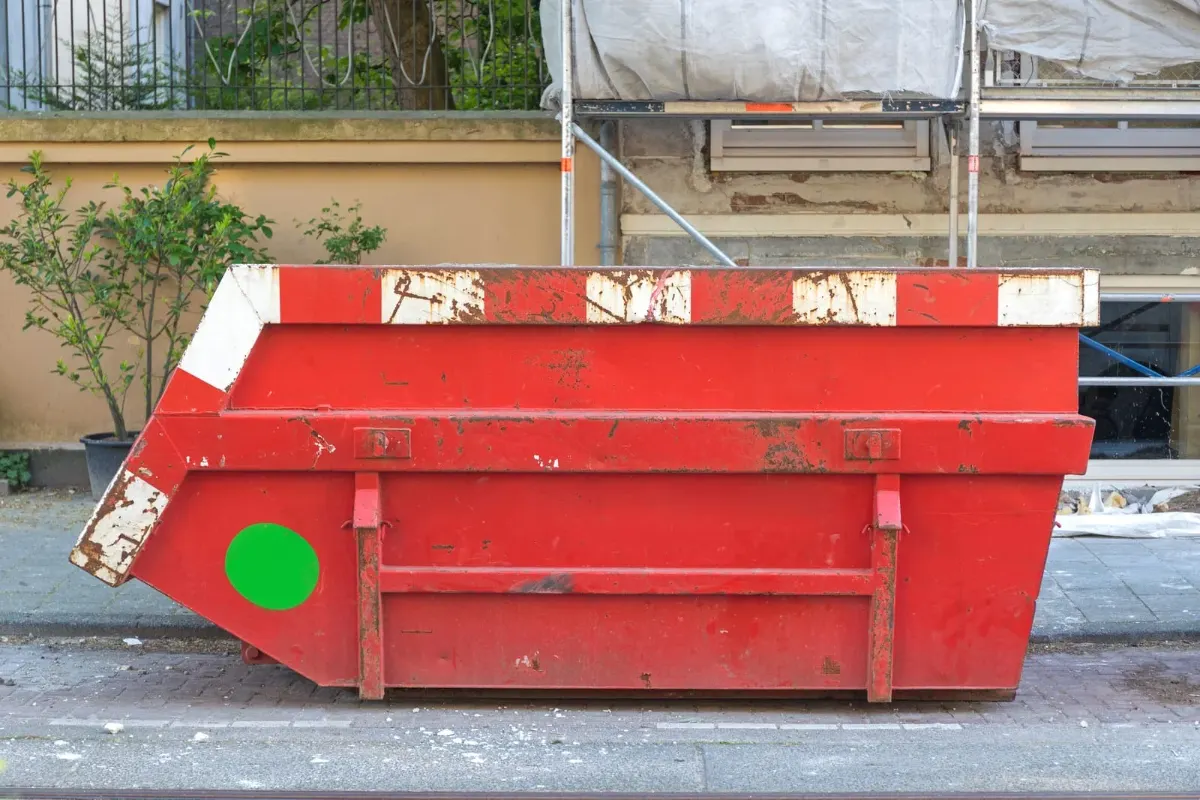
With the metal set aside, a heating strip-out is a modest load. A 4 tonne midi skip covers most whole-house jobs. If a back boiler is coming out, or the work is part of a bigger refit, an 8 tonne builders skip is the safer choice.
Most terraced streets here have no off-road parking. So the skip goes on the road and needs a permit from Sefton Council, at £23 per skip per week (£43 in high-congestion areas). Apply before the installer starts, not in the week of the job. After all, you do not want to pause a heating strip-out halfway.
Every load comes back to our own recycling centre for sorting. Our environmental and recycling page explains how that works.
We cover this area daily and also run Bootle skip hire jobs across north Merseyside.
Replacing the old system with a heat pump? Our article on heat pump retrofit waste in Birkdale covers it.
Ring us on 0151 909 6399 about your central heating removal and tell us whether a back boiler is involved. Our contact page is there if your installer would rather deal with us directly.