
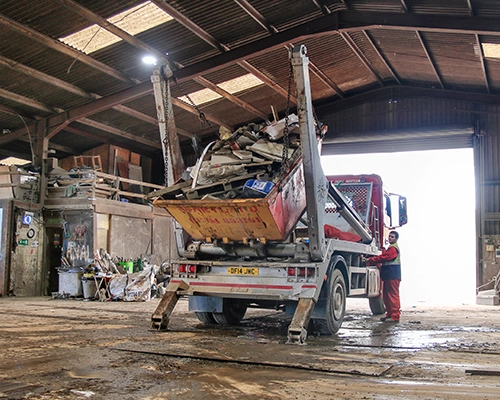
Anyone stripping out a kitchen, lining a loft or boarding a new wall ends up with a stack of plasterboard offcuts, and they cannot simply go in with the rest of the rubble. Plasterboard disposal in Ormskirk follows a separate set of rules from ordinary building waste, because the gypsum inside it has to be kept apart from general landfill material. We deal with this on local renovation jobs all the time, and planning for it early avoids a contaminated skip and a problem at the tip. It pairs closely with the wider question of building waste disposal in Ormskirk once a project wraps up.
Why Plasterboard Is Treated Differently
Plasterboard is made largely of gypsum, and gypsum behaves badly when it is buried alongside biodegradable waste. As the two break down together they can produce hydrogen sulphide, the gas responsible for that unmistakable rotten smell, which is why the regulations require gypsum-based material to be separated from general waste rather than mixed in. For you that means plasterboard should not be thrown into a skip already holding timber, soil, packaging and household clutter. Kept clean and dry, plasterboard can be recovered and recycled, but once it is soaked or buried in a mixed load that option largely disappears.
Planning the Strip-Out Order
The easiest way to keep plasterboard separate is to think about the order you take a room apart. Pulling the boards down as their own stage, before the general clutter and broken fittings go out, keeps them clean and grouped rather than scattered through the rubble. On larger refurbishments we will often suggest keeping the plasterboard to one side and dealing with it on its own, while the bulk of the job runs through a standard skip. For the general waste an 8 tonne builders skip suits a full strip-out, while a smaller 4 tonne midi skip covers a single room without taking over the drive.
What Else Cannot Share the Skip
Plasterboard is not the only material that needs holding back. Old paint, adhesives, solvents and similar chemicals from a renovation cannot go in a general skip either, and some older properties around Ormskirk still hide materials that need specialist handling. If you uncover anything you suspect contains asbestos, stop and take advice rather than bagging it up, because it falls under the rules for hazardous waste that cannot go in a skip. Knowing what to set aside before you start saves a rejected load and a far bigger bill later.
Handling the Rest of the Renovation Waste
With the plasterboard and the awkward materials set aside, the remaining waste from most Ormskirk projects is the everyday mix of timber, brick, broken fittings and general clutter. This is what the main skip is for, and getting it off site quickly keeps the work area safe and the job moving. Larger clear-outs that come with a renovation, such as emptying a property before the trades arrive, often sit better as house clearance skip hire rather than a single overstuffed builders skip. Everything that reaches our yard is weighed and sorted, with as much as possible sent for recycling and recovery rather than landfill.
Keeping Plasterboard Clean and Dry on Site
Plasterboard only holds its recycling value while it stays clean and dry, so where you put it during the job matters as much as keeping it separate. Boards left out in the rain soak up water quickly, swell and begin to fall apart, and once that happens the gypsum is far harder to recover and far heavier to move. Stacking the offcuts flat under cover, whether in a garage, a porch or simply beneath a sheet, keeps them in a state that can still be recycled rather than written off. Grouping the pieces as you remove them, rather than letting them mix with dusty rubble and broken timber, also makes the eventual handover much simpler, because clean board can be dealt with properly while contaminated board cannot. There is a cost angle to all of this as well. Mixed loads that contain gypsum can be rejected or attract higher charges, and a skip that has to be picked through and re-sorted is slower and more expensive to process than one that arrived tidy. Taking a little care over where the plasterboard sits while the work is underway protects both the recycling outcome and your bill, and it removes the risk of a load being turned away at the point of collection. None of it takes long, and on a busy renovation that small habit pays for itself many times over by the time the work is finished and the last load leaves the site.
Local Knowledge Across the Ormskirk Area
Building waste varies from street to street, and the older housing stock around the town throws up different challenges from newer estates. We cover the whole area, so whether you are working in the heart of town with Ormskirk skip hire, out towards Aughton skip hire, or up the road with Burscough skip hire, we can talk through how best to split a renovation’s waste before the first board comes down.
If you have a strip-out coming up and you are not sure how to handle the plasterboard, get in touch before you start. Call our team on 01704 779345 to plan the right setup, or reach us through our contact us page.