
A semi in Shevington is halfway through a loft conversion, and the builder wants to know whether all the broken board can go in one skip. Plasterboard disposal in Shevington follows a rule that many people have never heard of. The stud walls are up, and the old bedroom ceiling below has come down so the joists can be strengthened. Meanwhile a stack of broken plasterboard is growing on the landing.
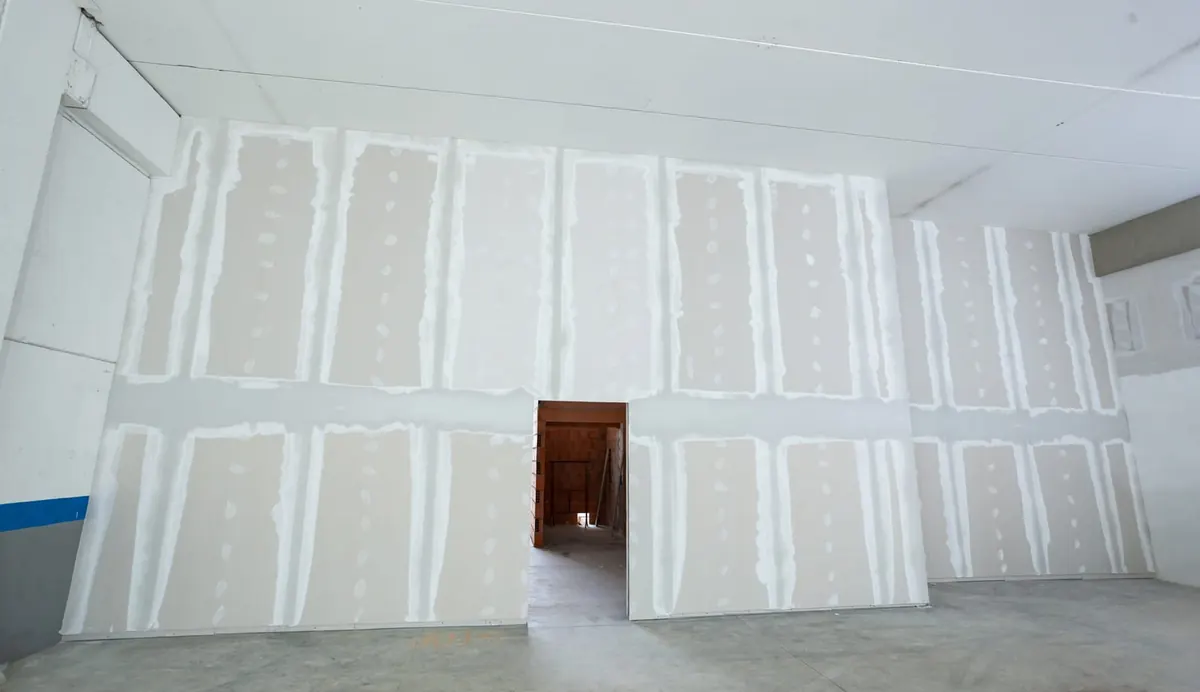
Shevington sits on the Wigan side of the boundary, between Standish and Appley Bridge. It has plenty of semis, detached family homes and estates built in the second half of the last century. Those houses are now prime candidates for loft conversions, knock-throughs and new partition walls. All of these produce gypsum waste.
The Environment Agency Rule in Plain Terms
Plasterboard is mostly gypsum, and the Environment Agency treats it as a waste stream of its own. Gypsum waste must not go into landfill cells that take biodegradable waste, such as the food, wood and paper in ordinary household rubbish. It must go for reuse or recovery instead.
Many builders still remember a time when a small amount mixed in with general waste was acceptable. That is no longer the case, because there is no percentage tolerance any more. Even a few offcuts thrown in with the rubble can change how the whole load has to be handled.
Plasterboard Disposal in Shevington – What It Means on Site
In practice the rule is easy to follow if you plan for it from the first day. Keep all plasterboard separate from everything else. That includes offcuts, broken sheets and old boards stripped from ceilings and stud walls. Either stack it neatly in its own area or bag it on its own. Do not let it end up mixed in with timber, brick or general rubbish.
Most importantly, tell us about it before delivery. If we know plasterboard disposal in Shevington is part of the job, we can advise on how to keep it separate and present it. Then it can go for recovery rather than causing a problem at the end. Our article on plasterboard disposal and building waste separation in Ormskirk goes through the same principles for a different local job.
Stud Walls, Ceilings and Loft Conversions
Different jobs produce plasterboard in different ways. Taking out a stud wall between a kitchen and dining room gives you boards from both faces. The timber studs, skirting and architrave come out too. An old ceiling produces boards, dust, insulation and sometimes lath and plaster in older parts of the house. A loft conversion produces a mix of offcuts from the new work and old ceiling material from below.
Keep timber studs and joists clean of plaster so we can sort them easily. Also keep metal stud and track to one side where possible. You may be taking down a textured ceiling in a house built or refurbished before 2000. If so, have it checked first. The HSE lists textured coatings such as Artex among the materials that can contain asbestos, and asbestos can never go in a skip. The HSE guidance on where asbestos is found shows the other places to check. Our guide to asbestos and skip hire explains the safe route.
Choosing a Skip for Plasterboard Disposal in Shevington
Renovation waste is usually a mix of heavy and bulky. Brick, plaster and old tiles are dense, while timber, packaging and insulation take up space. For a single room knock-through or a ceiling replacement, an 8 tonne builders skip is the usual choice. Heavy material like plaster and rubble hits the weight limit long before the skip looks full.
A larger project may run over several weeks, such as a loft conversion with a dormer or a whole-house refurbishment. Then a 20 yard roll on roll off skip can make more sense, provided there is room for the lorry to drop and lift it. Many Shevington driveways are not long enough for that. So we will talk through access before recommending one.
Wigan Council Skip Licence Rules
Shevington is in the Wigan borough, so the rules for a skip on the road come from Wigan Council rather than Lancashire County Council. Wigan calls it a skip licence. The skip company applies at least two working days before the skip arrives, and there are no retrospective applications. Under Wigan’s rules a skip can only go on the carriageway, never on a footpath or grass verge. The Wigan Council skip licence guidance sets this out.
If the skip sits on your own driveway, you need no licence at all. If it has to go on the road, give us enough notice to have the licence in place before the day. Our article on skip permits explained covers the wider picture.
Where the Rest of the Waste Goes
Every skip we collect comes back to our own recycling centre. We sort it there rather than pass it on to a third party. We separate timber, metal and hardcore to recover as much as possible, and keeping plasterboard apart from the start fits with that. You can read more about how we handle it on our environmental and recycling page.
We also work regularly in the neighbouring village. Our page on skip hire in Standish covers that side of the borough.
Booking a Skip in Shevington
The easiest renovation jobs agree the waste plan before the first wall comes down. Decide where the plasterboard will go, where the skip will sit and whether you need a licence. Then the job runs without stopping. Our page on skip hire in Shevington has more on how we cover the area.
For plasterboard disposal in Shevington, tell us what you are taking out and how much board is involved. Also tell us where the container can go, and we will tell you plainly which size fits. Ring our team on 01942 417456 or use our contact page.