
Most renovation advice quietly assumes the house is empty. The reality across West Lancashire is the opposite, because the majority of the renovation skips we deliver go to homes where the family is still living in them, cooking around the works, sleeping through the dust sheets and doing the school run past a half-built kitchen. An occupied renovation is a different job with different waste logistics, and our wider guide to skip hire for home renovations and improvements across West Lancashire covers the general principles. This one is about the version where you never move out.
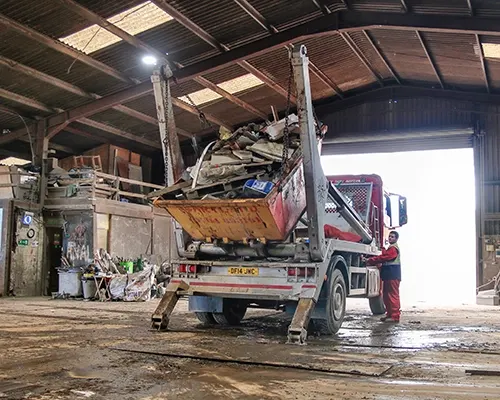
An Occupied Renovation Is a Different Job
When a house is empty, waste can pile where it likes and the skip schedule barely matters. When you live there, every bag of rubble crosses the hallway you still use, every full skip day is a day the family works around, and waste left lying does not just slow the trades, it moves into your living space. The renovations that stay bearable all share one habit, which is treating waste removal as part of daily life on the project rather than a cleanup that happens eventually. In older homes, check for asbestos before stripping anything out, and read the HSE guidance on asbestos.
That means waste leaves the working rooms every day, the skip is positioned for the shortest indoor carry, and the hire is planned around the phases of the job rather than booked once and hoped about. None of it is complicated, but after a century of delivering to lived-in renovations we can tell within a week which households planned for it and which are camping in their own building site.
Phase the Skips Around the Rooms You Live In
An occupied renovation almost never does the whole house at once, because you need somewhere to sleep and something to cook on. The work moves room by room, and the skip hire should move with it. The heavy opening phase of each room, when the strip-out happens, justifies an 8 tonne builders skip that clears quickly, while the slower building and finishing weeks suit a 4 tonne midi skip that takes less of the drive your household still parks on.
Matching the container to the phase is a discipline worth learning once and applying to every room, and our piece on how to match your skip hire to the stages of a Leyland renovation works the same logic through a full project. The trap to avoid is the permanent half-full skip, paying hire on a container that sits for weeks because the job’s pace and the skip’s size were never matched.
The Kitchen Is the Crunch Point
Every occupied renovation has one phase the household dreads, and it is nearly always the kitchen. The room produces the densest waste of the project, from the old units and worktops to tiles, appliances and often a floor, and it does so while the family eats from a microwave in the dining room. This is the phase where waste discipline pays most, because a kitchen strip-out cleared into a skip on day one gives the fitters a clean room on day two, and every day saved is a day closer to cooking properly again. Our guide to skip hire for kitchen and bathroom renovations covers those two rooms in detail, and the same thinking applies to the bathroom, where the household’s tolerance for delay is even thinner.
Dust, Carry Routes and the Daily Reset
The waste you can see is only half the story in a lived-in renovation. The carry route from the working room to the skip decides how much dust and debris migrates through the rest of the house, so plan it deliberately, down the shortest path, over floor protection, through a door that is not the one the children use. Bag rubble in the room rather than carrying it loose, keep one window route for first-floor waste where the layout allows, and end each working day with the route swept and the working room sealed. Families who add this ten minute daily reset to the routine report a renovation they lived alongside. The ones who skip it report six months of grit in the butter dish, and they are not exaggerating by much.
Keep the Drive Liveable Too
On a long project the skip becomes a semi-permanent resident, so place it like one. Leave the household car an exit that does not require negotiation, keep the bin collection point clear, and position the skip so loading happens on the working side rather than across the path to the front door. Load it level rather than heaped, because an overfilled skip cannot legally be collected and a refused collection on a lived-in project blocks the drive for days rather than hours. If the property has no drive at all, a road placement needs a council permit arranged before delivery, which we handle as part of the booking, and on a phased renovation it is worth arranging the permit dates to match the phases rather than paying for road space in the quiet weeks.
Where the Works Waste Goes
Every load from every phase comes back to our own recycling centre in Burscough, where timber, metal, hardcore and plasterboard are separated into their proper streams and processed rather than buried, as our Environmental & Recycling page explains. We deliver to lived-in renovations across the whole area, from the villages like Haskayne and Bickerstaffe to the towns, and the drivers who deliver phase after phase to the same address get to know a project the way the family does.
If you are about to renovate around your own family, plan the waste like you plan the works. Call our team on 01704 779345 or set out the phases through our contact page and we will keep the skips matched to the job and the house liveable all the way through it.